Webinar Wrap-up: Building Capability in the AI Era

If you missed AIM’s recent webinar, Building Capability in the AI Era - Why Connected Learning Matters, here is a wrap-up of the key ideas from the session. You can also watch the full recording here and read the answers to further audience questions in the audience Q&A.
Roles Are Built on Combinations of Skill
A sales professional needs more than sales knowledge to perform their role effectively. Customer discovery, communication and commercial judgement all contribute to their work, just as planning, risk management and stakeholder engagement are essential to project management. AI adds another consideration to the skills professionals need for their roles. Alongside their existing knowledge and experience, they need to understand where the technology can support their work, how to assess its outputs and when human judgement remains essential.
Research from the International Labour Organization (2026) examines how employers seek combinations of skills across different areas, including digital, cognitive and interpersonal skills. While short courses can address a specific development need, finding learning that brings several capabilities together can be more difficult. Learners and organisations may need to select courses from different areas, decide which skills to develop first and work out how the learning connects.
A recent webinar hosted by the Australian Institute of Management (AIM), Building Capability in the AI Era: Connecting Learning Across Multiple Capability Areas, examined the challenges of identifying development needs, connecting learning across different capability areas and supporting employees as they apply their learning at work. Moderated by Pepe Newton, Learning Experience Design Consultant at AIM, the roundtable featured George Mathew, Vice President of AI Advisory and Client Transformation at Hexaware, Tanya Morris, Senior Learning Designer at AIM and Lu Ngo, Head of Digital Skills at AIM.
Identifying the Skills People Actually Need
Of the 185 respondents to the webinar's first audience poll, 27% identified keeping up with AI-driven changes to roles as their biggest challenge when determining capability needs. Another 22% struggled to identify the right combination of capabilities, while 20% found it difficult to decide which should take priority.
George encouraged organisations to look beyond job titles and examine the tasks employees perform. A meeting summary, for instance, might be drafted by AI, while the employee remains responsible for checking whether important points were missed and deciding what follow-up is required. A broad job description rarely captures that distinction.
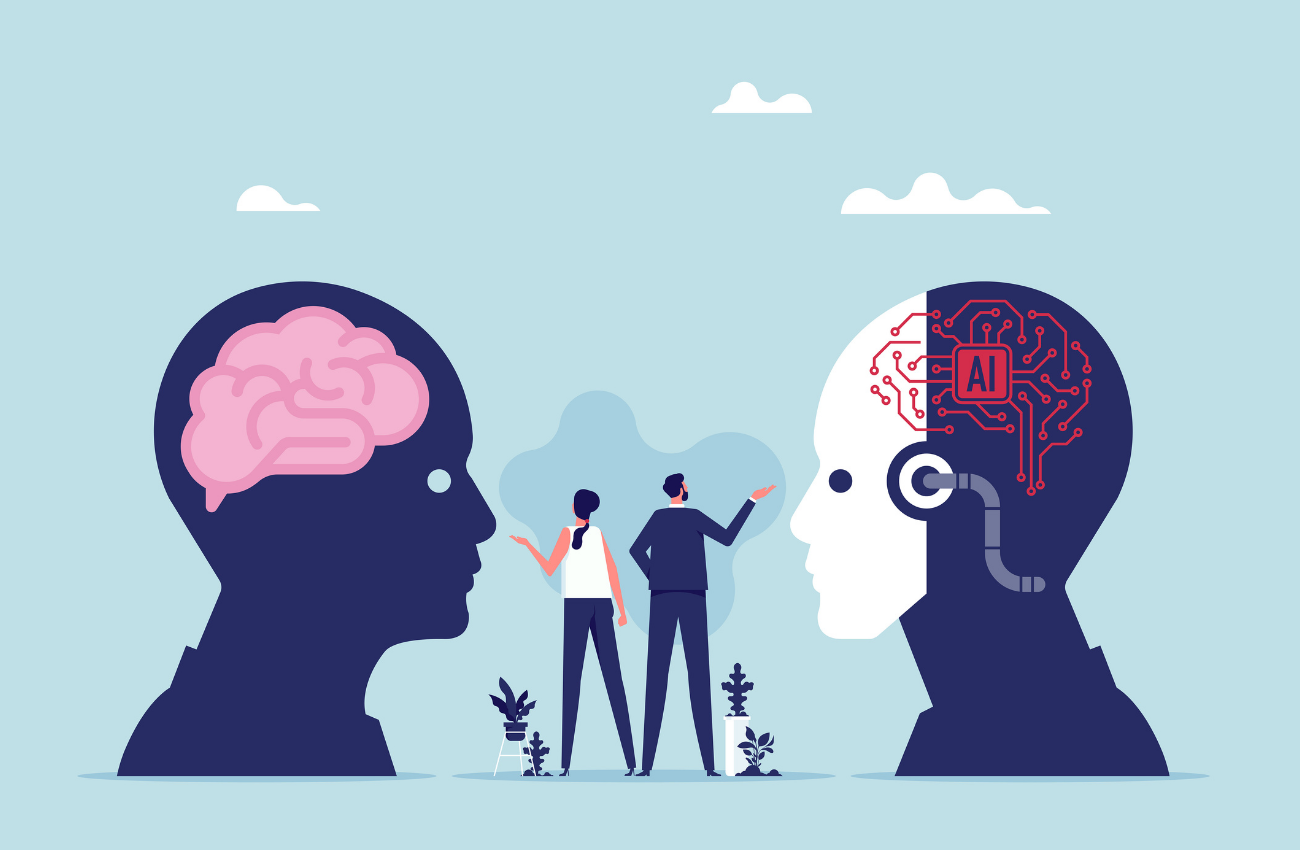
Tanya approached the same question from a learning design perspective, starting with "What is the actual problem space here?" Conversations with employees, managers and subject matter experts can show what people are expected to achieve, where they struggle and whether training is likely to help. Pepe added that capability frameworks and learning needs analysis make it easier to compare current capabilities with what a role requires. They also help organisations see when the answer lies beyond training, such as access to the right information or systems.
Connecting AI Skills with Professional Skills
George offered a practical principle for AI training: “teach AI inside the professional skill, using real work”.
A tool demonstration can explain a feature, but it says little about the judgement required to use the output in a customer meeting or project discussion.
In sales, AI can help research a prospective customer, prepare a company briefing and suggest questions for a meeting. The salesperson still needs to check whether the information is reliable, identify what matters to the customer and decide how to approach the conversation. Using AI effectively therefore depends on the sales knowledge and judgement they bring to the task.
The discussion also considered what different learning needs mean for course design. Lu noted that focused short courses remain useful when someone wants to develop a particular capability. AIM's AI for Productivity short course, for example, helps professionals learn how AI can support familiar workplace tasks. However, a broader development goal presents a different challenge. A salesperson might study AI-assisted research separately from customer discovery, then find they will need to work out how to use both when preparing for a meeting. Bringing those subjects together during training creates opportunities to practise the work as it happens.
Foundational knowledge matters too. Tanya asked, "How does it work? Why does it hallucinate?" Employees who rely on AI-generated information need to recognise its limitations before using that material to inform a business decision. For people new to AI, these foundations should come before more demanding applications.
Learning, Unlearning and Applying Skills at Work
A second poll asked participants about their biggest challenge when turning identified development needs into an effective learning program. Among 177 respondents, 38% selected learning that failed to carry through into everyday work. Another 18% identified missing foundational capabilities.
Tanya emphasised the importance of giving learners opportunities to practise what they have learned in situations relevant to their roles. As she explained during the webinar, "you need to immediately embed it into context". For someone learning to use AI in customer research, this could involve reviewing an AI-generated briefing, checking the accuracy of the information and deciding what would be useful in a customer conversation.

She also discussed the value of communities of practice, where employees can share their experiences, compare approaches and learn from challenges their colleagues have encountered. These discussions can help employees develop confidence and discover how others are applying new skills in their work.
George raised a related challenge: learning new skills may also require people to reconsider established ways of working. He discussed the importance of unlearning and relearning as AI changes how familiar tasks are performed. Employees may need to review processes they have followed for years, while continuing to apply the professional knowledge and judgement those tasks require.
Repetition has a role here. Pepe referred to the forgetting curve, observing that "without reinforcement, we forget new learning surprisingly quickly". Practising a task after a workshop and receiving feedback offers a reason to revisit ideas that might otherwise fade.
Lu described a work-integrated learning experience combining online study with group projects and presentations to an employer. Participants applied what they had learned during the program, with opportunities to discuss their decisions before completing it.
Even good training can run into workplace restrictions. George noted that employees may learn to use AI and then return to an organisation where those tools are unavailable. Managers need to clarify acceptable use and provide access to approved tools if employees are expected to practise. Without that access, the learning remains largely theoretical.
Connecting Learning Through a Clear Sequence
When designing programs that span several capabilities, we can use self-paced modules to introduce foundational knowledge, facilitated workshops to explore and practise new skills and workplace activities to help learners apply them in their roles. Planning these experiences in a logical sequence also allows us to address gaps in knowledge before introducing more complex tasks, while making the connections between different capability areas clearer for learners.
Tanya discussed matching the format to the learning need. Independent study may work for introducing concepts; facilitated workshops allow people to test decisions in realistic scenarios and hear how colleagues approached the same problem. Participants also need enough preparation to contribute meaningfully to those sessions.
Lu used AIM's AI for Project Management short course as an example of learning organised around a familiar process. The course introduces AI applications across the project lifecycle, including planning, risk tracking and reporting, so participants can assess where they might use them in their own work.
Longer programs can combine self-paced modules with workshops and workplace activities, each building on earlier learning. That sequence is especially helpful when people would otherwise have to assemble separate courses and work out the connections themselves. It also allows facilitators to address gaps before participants move on to more demanding tasks.
The challenge for learning designers is to organise these activities so that each prepares participants for what follows, without repeating content unnecessarily or moving into advanced work before the necessary foundations are established.
Bringing Capabilities Together Through Connected Learning
The panel explored why organisations need to consider the full development journey, from identifying capability needs and sequencing skills to providing practice, feedback and workplace support. This becomes particularly important when employees need several related skills, but available training options do not show how they fit together. A focused short course may be the right choice for a specific skills gap, however when the goal requires capabilities from several areas, a connected learning program can provide the additional structure needed to develop and apply them together.
Towards the end of the webinar, Lu introduced AIM's Guided Pathways, which bring related capabilities together in a pre-mapped program. Participants combine self-paced learning with facilitated workshops and practical workplace activities organised around a role or development goal.
AIM's AI-Enabled Sales Professional Guided Pathway brings sales capability together with practical AI use and human judgement. Participants work on opportunity qualification, customer discovery and stakeholder engagement while considering how AI can support research and preparation. They practise using these capabilities in sales situations rather than studying each topic in isolation.
For individuals or organisations considering broader development needs, connected learning or guided pathways offers a way to make the relationship between skills clearer while giving employees opportunities to practise and apply them as part of their professional development.
Ready to strengthen your leadership skills?
Take the next step in your development. Explore our Guided Pathways and discover a different way to build your capability.
Book online by 18 November using the code AIMFLASH at checkout to save $250 on your enrolment.